Sunday, April 24, 2016

Textbook Assignment 4

Textbook Assignment 4


Curtis, C. P. (1995).   The Watsons go to Birmingham, 1963.   NY:  Delacorte.

Although Kenneth Watson has characteristics that set him apart from other ten-year-old African-American boys, like his lazy eye and love for reading, this somehow fits the family of Weird Watsons. He has a loving, overprotective mother, a stern dad, who is a kid at heart, a mischievous older brother, Byron, that teases him, and a sweet, yet annoying, younger sister, Joey. Through Kenny's daily activities we see a few of the Watson's struggles, dealing with money, welfare, and  their heater system failing, but when Byron can't stay out of trouble Momma and Dad decide it's time take a trip to Birmingham, Alabama to visit Grandma Sands. However it's 1963 and Flint, Michigan is nothing like Birmingham. After Joey's life is spared in a church bombing that Kenny witnesses, he seems "stuck." Despite Kenny's age, readers will be able to relate to the battle of overcoming an horrendous event in life with help from the people you would least expect. This story gives a different view of how tragic historical events effect young people.


Schlitz, L. A. (2007).   Good masters, sweet ladies Boston, MA:  CandlewickPress.


Good Masters! Sweet Ladies! is a book full of miniature plays, nineteen monologues and two dialogues. The plays feature snippets of many adolescents' lives in England during the year of 1255 in a Medieval Manor. Some of the words used during that era are not familiar to readers, however, the author keeps the readers informed by providing short descriptions in the margin or a page of background information beforehand. The stories range from different levels of class. For example, we can read the story of  Thomas, a doctor's son,  Taggot, a blacksmith's daughter, or Mogg, a peasant's daughter, and much more. Though it is not mandatory to read the book in a particular order, these stories intertwine to give an accurate presentation of life during the Medieval Age. 

Textbook Assignment 3


Alexander, K. (2014). Crossover. New York: Houghton Mifflin Harcourt.
Josh and Jordan are identical twin brothers and the stars of their junior high basketball team, but unforeseen conflicts turn the boys’ lives upside down. Through Kwame Alexander’s unique style, this book is delivered in a series of poems and separated into      basketball quarters. We follow Josh as he tackles loneliness, bitterness, and anger   towards his brother’s absence due to his new girlfriend and his dad’s illness. The   figurative language, graphical elements, and other poetic techniques will make you cheer, weep, and grin as Josh strives to repair his relationship with his brother and cope with his father’s death.


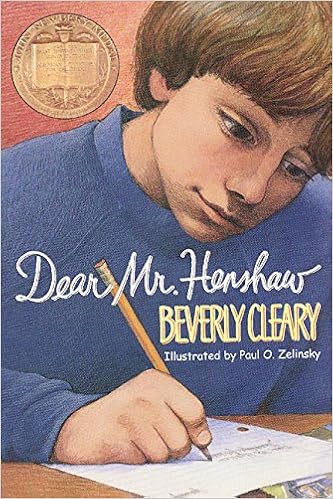
Cleary, B. (1983).  Dear Mr. Henshaw. NY: Morrow.
Like many children, Leigh is a young boy whose parents are divorced. While his writing begins as a school assignment to write a letter to his favorite author, Mr. Henshaw, Leigh starts his own diary and entertains the idea of becoming an author himself. Through these journal entries we see a story unfold of Leigh’s loneliness as an only child with an absent father and the conflict of his dad possibly having another family. Throughout the plot, as Leigh experiences emotional growth, we also see improvement in his writing skills. The story ends with a satisfying resolution when a moment comes that Leigh has been waiting for.  His dad tries to rekindle things with his mother, but is denied. Strangely, Leigh is at peace with this decision.

Gino, A. (2015). George. New York: Scholastic.
George is what everyone calls him, but deep down he identifies  with being a girl. The setting in this novel is significant because it hints more towards the present era. When George and his best friend Kelley decide that he play the leading role as Charlotte, the audience and staff are a bit skeptical afterwards, but still congratulatory. Even George’s older brother and mother warm up to the idea of him being transgender. Though every reader may not be able to relate to George’s exact dilemma, they will still be able to relate to the overall theme of being who you are.

Paterson, K. (1972). Bridge to Terabithia. NY: Crown.
In this book, two preteens, Jess and Leslie, share a special bond that leads them to create a magical world called Terabithia. Leslie, a girl whose parents have moved to the small town from the city, pushes gender and cultural norms. Leslie rarely wears dress and dares to question the Bible, yet her and Jess are inseparable despite their differences. He cares for her so deeply that he is devastated when Leslie unexpectedly dies trying to cross the creek into Terabithia. This event gives us a rare look into a male character’s struggle while also incorporating a complicated theme of coping with death that some teens might have to learn sooner than others.


Schmidt, G. (2015). Orbiting Jupiter. New York: Clarion Books.

In this thrill packed plot Jack’s family takes in a troubled teen father foster kid named Joseph. Despite Joseph’s age and never having seen his daughter, his world revolves around her, Jupiter. The plot is full of twists and turns as Jack and Joseph’s relationship grows, Joseph gets on the right track in school, and searches for his daughter. However, Joseph’s past, his abusive father, won’t let him move on and threatens to change Joseph’s new life and Jack’s family forever. The characters in this story are realistic, relatable, and passionate, and they are willing to risk it all for each other.

Textbook Assignment 5

Textbook Assignment 5


Applegate, K. (2015). Crenshaw. New York: Feiwel & Friends.

 Applegate uses Jackson and Crenshaw to shed light on the concealed topic of homelessness. Jackson notices the small signs such as stacks of bills, less food, and his parents arguing about money. They’ve already been homeless once and had to live in their minivan, so naturally Jackson begins to worry. On top of that, his imaginary friend Crenshaw has began to show up again who hasn’t appeared since the last time they were homeless when Jackson was in the first grade. Though Jackson seems annoyed by Crenshaw, he is a bold character and exactly the type of friend that Jackson needs. Crenshaw helps him sort through his feelings and address his parents about their issues. This is a short read that will hopefully leave readers with a sense of gratefulness and lessons learned about family and true friendship.


Collins, S. (2004). Gregor the Overlander. NY: Scholastic.
Gregor is left in charge of his little sister, Boots, but when she falls into a hole in the laundry room, Gregor goes after her not knowing the world that awaits him on the other side. In this book, Collins creates a vivid world underneath the city of New York that is filled with giant cockroachs, bats, rats, and unusual humans. The author’s vivid description of the setting as Gregor explores through the grimy caves, makes the reader feel as though they are a part of the journey. However, what starts off as a simple quest leads Gregor to an adventure finding his long lost father who has been held hostage over two years by the rats. Readers will want to eagerly follow Gregor’s battle.


Gaiman, N. (2008). The graveyard book. NY: HarperCollins.

Tragedy strikes early as Nobody “Bod” Owens quickly becomes an orphan when his family is murdered by an evil organization, Jack. Bod is then taken in by ghosts, and his home becomes the graveyard, the setting for this novel. The way the graveyard is portrayed in the story defines Gaiman’s style and makes the novel that much more enjoyable. There is a distinct difference of life in the graveyard versus outside the gates. The dialect of the ghosts mirror the time era they lived in and though the graveyard provides a safe home for Bod, it still remains exactly what a graveyard stands for, death. There is no progression, technology, or advancement, so as Bod grows up he feels he’s learned as much he can there and decides to live his life on the other side of the gates, leaving his protection behind.


Hale, S. (2008). Rapunzel’s revenge. NY: Bloomsbury.

The Hales revamp the beloved fairytale story of Rapunzel with their own style by giving the characters a twist in a new setting. At the beginning Rapunzel is tricked by Mother Gothel who is really an evil witch, but once Rapunzel finds out the truth about her real mother, she escapes from the magical tree using her long hair to climb down. Once she escapes, Rapunzel meets Jack who eventually takes on the role of her sidekick on her journey to Gothel’s mansion to free her real mother. Though Rapunzel may start off as a fragile girl, through her many obstacles she is strengthened and takes on a “shero” attitude in an Old Western setting with horses, cowboys, and her red hair as a lasso.


Holm, J. (2014). Comics squad: Recess! NY:
Random House.

In this book, characters such as Baby Mouse, Lunch Lady, and others are pulled from popular comic books to unite and make a collection of eight short stories. Though each comic has a different plot, they all have two similarities: the setting and theme. Each story takes place in a school like setting whether it is in the classroom, cafeteria, hallway, playground, or library. The theme/concept of recess is also tied into most of the stories as the characters go on some sort of quest, or solve a problem during recess time as the title suggests. Comic book readers will love this collection and the creativity of seeing some of their favorite authors’ work collaboratively put together in one book.


Landry, D. (2007).   Skulduggery pleasant NY: HarperCollins.

The interesting art cover for this book will certainly peak reader’s interest to give this book a try, and once they open it they will be even more intrigued by the characters, Stephanie and Skulduggery. Their relationship is formed after Skulduggery rescues Stephanie from a strange visitor at the mansion she inherits from her deceased uncle, and the two team together to solve the mystery of her Uncle’s death and fight villains along the way. Landy’s style brings the enchanting creatures to life in a way that captivates the reader, while enjoying the witty dialogue between the two characters. By the end, Stephanie sheds her old self and claims a new name, Valkyrie Cain.