
In
this book, Goble tells a story of a young Native American girl who shares such
a deep connection
with horses that she's happy living with them after a storm drives her and the horses away from her home and family. Once
her family finds her, she is sad that she has to
leave the horses. Told with simple words and vivid paintings, kids will enjoy
this story explaining the Native
Americans' connections to the Horse People.
Barbara
Cooney and Geoffrey Chaucer come together to present an adapted story from the Canterbuy Tales of the fox and rooster.
The fox has the best voice in the land, and even
though he's given fair warning he still falls for the foxes flattery as he tells
him he just came to hear him sing.
Thankfully the rooster doesn't stay ignorant for long as he turns the tables back on the fox to
escape back his family.

Scheer, J., & Bileck, M. (1964).
Rain makes applesauce. New York: Holiday House.
This is a light-hearted book. It doesn't contain a plot, characters, or even a conflict. As stated in the book several times, "It's just silly talk." Julian Scheer talks about how rain makes applesauce, and gives examples of other crazy things that could happen if that were true. Marvin Bileck brings those things to life with his very detailed and graphic images. This book is the perfect fun read for kids.
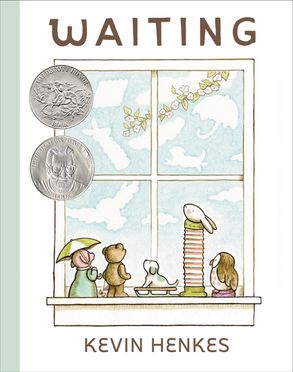
Henkes, K. (2015). Waiting
(1st ed.). New York, NY: HarperCollins.
An
owl, pig, bear, puppy, and rabbit experience different things such as weather, visitors, and individual things
that make them happy as they wait for other marvelous things to happen. When an unexpected visitor arrives, a cat, they
are curious to find out what
she's waiting for. Read this book filled with beautiful pictures of watercolor
paint and color pencils to see
if this unique family of friends ever find out.
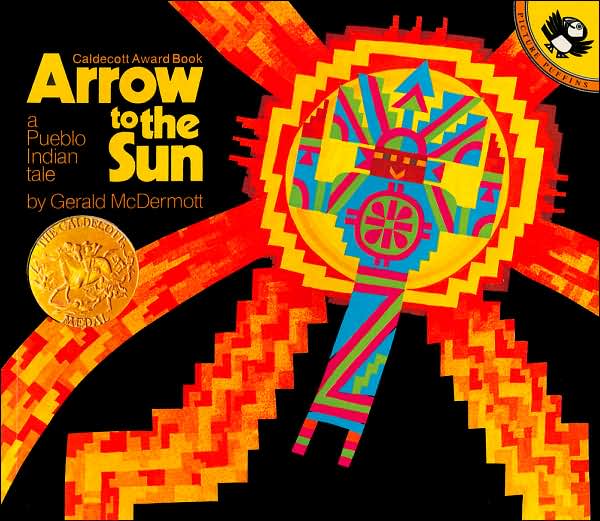
McDermott, G. (1974). Arrow to
the sun: A Pueblo Indian tale. New York: Viking Press.
With
contrasting geometric images full of dynamic, bold colors, McDermott tells a Pueblo Indian tale of a
boy who is teased by the village kids for being fatherless. He sets out on a quest to find his father, but
encounters some challenges along the way. He must first prove himself by passing through four chambers of
ceremony. Read to find out if the boy
is successful and challenge kids to think of another myth they might remember similar to this one.
Shannon, D. (1998). No, David! New York: Blue Sky.
Kids
and parents will be able to relate to this book as we follow David through his
day of mischievous activities
as he does things that kids do like make too much noise, play with his food, track mud in the house , and refuse
to settle down during bedtime. David is familiar with the words "no,"
but his attitude changes once he is put in time out for breaking a flowerpot. David Shannon uses full page vibrant
pictures to tell David's story.
Pinkney, J., & A. (2011). The
lion & the mouse: A fable by Aesop. London: Walker Books.
Pinkney
retells one of Aesop's most popular fables with very few words, watercolor like
pictures that, and onomatopoeias. When
the lion shows an act of kindness by releasing his
prey, the mouse, it is up to the mouse to decide if she wants to return the
favor when the lion is
captured by a trap set up by poachers. Use this fable to exemplify a lesson
that all kids need to learn.

Follow this family as they take a trip from Nebraska to California on The Pacific Railroad in 1869. We look into a behind the scenes view of the workers, the way the train works, the dangers that were involved with taking the train, and the feeling of moving swiftly across the deserts and plains after the days of the slow moving Oregon Trail. Floca packs this book with lots of details and information to give readers a brief history lesson on exploring the country during that era.

Wiesner, D. (2006). Flotsam.
New York: Clarion Books.
When
a camera is washed ashore, a young boy wastes no time getting the pictures developed. He's amazed
at the photographs that show him places that the camera has been, the people who have also found the
camera, and just how long the camera has been out
a sea being passed along. Through pictures that look like photographs, Wiesner passes along a story to readers.
Kids will be eager to see whether the boy will choose to pass the camera/story along or keep the
treasure for himself.

Ackerman, K., & Gammell, S.
(1988). Song and dance man. NY: Alfred A. Knopf.
In
this book, a group of grandchildren spend the afternoon at their grandparents
house. With an hour of time left to
burn until grandma is finished with supper, the kids follow their grandpa into the attic to relive his
days as a tap dancer. Vibrant color pencil-like drawings illustrate the fun filled night and highlight the
irreplaceable bond between grandparents
and grandchildren.

No comments:
Post a Comment
Please submit your comments here. All feedback is welcomed.